A Parent’s Guide to Choosing Between Bilingual and Fully International Tracks in Hanoi
Posted On: 19 October, 2026
Bilingual or fully international track in Hanoi? This parent’s guide explains the real differences in diplomas, language load, home-country re-entry, EAL support, track switching and 12-year costs. It is written for Indian, Korean, Chinese, Japanese and Vietnamese families. Start from where your child will be at 18, ask the four questions that matter, and get a clear decision framework before 2027–28 enrolment deadlines close.
A bilingual track in Hanoi combines an English-medium programme with Vietnam’s national (MOET) curriculum. It may award a Vietnamese diploma plus an international qualification. A fully international track teaches every core subject in English and leads to one international qualification, such as a US High School Diploma with AP, the IB Diploma, or A-Levels.
Getting it right comes down to one thing: matching your child’s schooling to where they’ll be at 18.
To start, answer four questions:
Where will your child study after Grade 12?
How long will you stay in Vietnam?
Which diploma does each track award, in writing?
What is your child’s English level today?
Beyond the quick answer, you’ll find a nationality-by-nationality re-entry table for Indian, Korean, Chinese, Japanese and Vietnamese families, a 12-year cost worksheet, a track-switching timeline, and a printable campus-tour checklist.
What Is the Difference Between a Bilingual Track and a Fully International Track?
For university options, the most important difference is usually the diploma, not the language. A bilingual track keeps the Vietnamese system open. A fully international track commits your child to an international qualification and a global university route.
Criteria
Bilingual (MOET) Track
Fully International Track
Language of instruction
English + Vietnamese
English for all core subjects
Curriculum
Integrated: international programme + MOET
One international curriculum (US, IB or British)
Diploma
Vietnamese diploma, may add an international qualification
One international diploma (e.g., US High School Diploma + AP)
Re-entry to Vietnamese public schools
Usually possible (confirm with the school)
Often difficult (confirm with the school)
Vietnamese-language load
High
Lower (mandatory content still applies to Vietnamese citizens)
Best fit
Long stay in Vietnam, Vietnamese university option
US/Canada/UK/Australia universities, mobile families
Relative cost
Lower
Higher
“Bilingual” is a loose label in Vietnam. The English share varies widely by school and programme. Always ask for the split in hours per week.
Bilingual vs Fully International Track
How the two tracks compare in Hanoi
Bilingual TrackEnglish + MOET curriculum
🗣️Language
English + Vietnamese
📜Diploma
Vietnamese diploma, may add an international qualification
🎓University route
Vietnam, with some international options
🔄Public-school re-entry
Usually possible
🏠Best fit
Long stay in Vietnam
💰Relative cost
Lower
VS
Fully International TrackEnglish for all core subjects
🗣️Language
English
📜Diploma
One international diploma (e.g. US High School Diploma + AP)
🎓University route
US, Canada, UK, Australia and English-taught universities
🔄Public-school re-entry
Often difficult
✈️Best fit
Globally mobile families
💰Relative cost
Higher
Key question: Where will your child be at 18? The diploma each track awards matters more than the hours taught in English.
Comparison of bilingual and fully international school tracks in Hanoi. Confirm diplomas and re-entry rules with each school in writing.
Why Should You Start From the Exit, Not the Entrance?
Where your child is heading at 18 largely determines the right track. Starting from tuition or brand alone risks choosing a track that doesn’t lead where your child needs to go. Budget is still a real limit, so use it to filter options, not to make the choice.
At True North International School, admissions conversations follow what we call the True North Compass Check. It has four bearings, and each one narrows the choice.
The True North Compass Check: Four Bearings
Bearing
Question to answer
If the answer is…
Track usually favoured
Destination
Where will my child study at 18?
US, Canada, UK, Australia
International
Vietnam (incl. VinUni, Fulbright Vietnam, public universities)
Bilingual, or International for English-taught universities
Duration
How long will we stay in Vietnam?
Under 3 years
International, or a home-country school
5+ years
Either; bilingual becomes realistic
Diploma
What does each track award, in writing?
Only a Vietnamese diploma + English certificate
Re-check the “dual” claim
Daily English
What is my child’s English level now?
Below grade level
Bilingual first, or International with EAL
True North Compass Check: Which Track Fits Your Child?
Answer 6 quick questions. Get a starting recommendation and the risks to check before you enrol.
Why “What Percentage Is in English?” Is the Wrong First Question
Hours of English matter less to university options than the diploma does. Grades, test scores and English proficiency results matter too.
Ask three things instead: Which diploma does my child receive? Who accredits the programme? What do we lose if we change direction half-way?
Does a Bilingual Track Really Give Two Diplomas?
Not always. Some bilingual programmes award a full dual diploma. Others award only a Vietnamese diploma plus an international English certificate.
REAL EVIDENCE · EXPERT VIEW
According to a 2024 Tuổi Trẻ report, integrated full-international tracks at bilingual schools are said to offer outcomes comparable to English-only schools at about 50–70% of the fees. The same report warns that some bilingual programmes award only a Vietnamese diploma plus an international English certificate, not a true dual diploma.
The fix is simple. Ask the school to name the exact qualification in writing before you pay a deposit.
How Is a US High School Diploma With AP Recognised?
A fully international American track leads to a US High School Diploma. Advanced Placement (AP) courses from the College Board add university-level rigour. In the US and Canada, this is the standard admission route.
Recognition in India, Korea, China and Japan depends on each university and on each country’s equivalence rules. Check the specific university’s international-applicant page. Don’t rely on a school’s general claim.
PRO TIP FROM TRUE NORTH INTERNATIONAL SCHOOL: Universities don't read brochures. They read transcripts. Before you enrol, ask each school for two things. First, a redacted sample transcript from a past graduate of the track you're considering. Check whether it shows credits, course levels (Honors/AP) and a GPA scale that admissions officers can read without a phone call. Second, ask for the school's College Board code (often called the CEEB code). Students use it to send AP and SAT scores, and US universities use it to identify the school. A school that hesitates on either request is telling you something.
For a deeper look at how AP compares with IB for mobile families, see our guide to AP in Hanoi.
How Can I Check Whether a School’s Accreditation Is Genuine?
Accreditation by bodies such as WASC, Cognia or CIS verifies that a foreign programme meets independent standards. Check it yourself in three steps:
Search the accreditor’s public directory for the school’s exact legal name.
Check the accreditation date and which grade levels it covers.
Ask for the school’s operating licence from Hanoi’s Department of Education and Training.
For example, True North International School holds ACS WASC accreditation for all grade levels (May 2024) and Cognia System Accreditation (since 2022). It is also a member of EARCOS, the East Asia Regional Council of Schools.
Can My Child Return to the Indian, Korean, Chinese or Japanese System Later?
Yes, but home-country university entry rules decide how long you can stay away before re-entry gets harder. Each system has its own pressure point.
REAL EVIDENCE · YOU'RE NOT ALONE
Vietnam's Ministry of Home Affairs reported more than 135,000 foreign workers from over 110 countries and territories working in Vietnam. Many of them are parents facing the same school decision.
CBSE/ICSE continuity; Indian university and entrance-exam eligibility
Returning before senior board years; recognised equivalence of the foreign diploma
International (if aiming abroad); plan the return before Grades 9–10 if aiming at Indian universities
CBSE/ICSE admission and migration rules; Association of Indian Universities equivalence
Korean
Overseas-returnee university admission; Korean-language academics
Meeting returnee eligibility conditions; keeping Korean literacy
International, alongside Korean study, or a Korean school (KISH / KGS Hanoi) for short stays
Current returnee admission conditions for the target university
Japanese
Kikokushijo (returnee) entrance; Japanese academic writing
Timing of the return; Japanese supplementary school
International for long stays; Japanese school for short postings
Each university’s returnee requirements
Chinese
Mandarin academic literacy; entry route depends on nationality status
Structured Mandarin heritage-language study
International + Mandarin programme
Admission category for your child’s status
Vietnamese / mixed
Public-school re-entry; Grade 10 entrance exam
Bilingual (MOET) track
Bilingual for a Vietnam route; International for a global route
Diploma in writing; mandatory Vietnamese content
PRO TIP FROM TRUE NORTH INTERNATIONAL SCHOOL: Start a "re-entry file" in your child's first year, not in the month you leave. Every June, collect the signed report card, attendance record, course descriptions and a copy of the school's accreditation certificate. Home-country schools and universities often ask for official, translated and legalised documents. Rebuilding three years of records from another country is slow and stressful. Requirements differ by country, so ask your embassy in Hanoi which documents need translation or consular legalisation before you need them.
What Must Vietnamese-Citizen Students Study?
Your child’s nationality determines which Vietnamese-language requirements apply. Circular 04/2020/TT-BGDDT requires Vietnamese citizens in foreign-invested schools to study Vietnamese and the Vietnamese Studies programme.
Level
Requirement for Vietnamese citizens
Kindergarten
Vietnamese-language development, at least twice a week
Primary
Vietnamese, at least 140 min/week; Vietnamese Studies, at least 70 min/week (Grades 4–5)
Lower & upper secondary
Vietnamese Studies, at least 90 min/week
REAL EVIDENCE · REGULATION
Circular 04/2020/TT-BGDDT requires Vietnamese-citizen students in foreign-invested schools to study at least 140 minutes of Vietnamese per week in primary, and at least 90 minutes of Vietnamese Studies per week in lower and upper secondary. For foreign students, schools are only encouraged to offer this content.
Will My Child Lose Our Home Language in an English-Only School?
The risk is real, but it can be managed. Speaking at home keeps conversation alive. It rarely keeps academic reading and writing alive.
Many families first notice the loss in writing. A child chats fluently in Korean or Hindi but can’t write a school-level essay in it. How much is lost also depends on your child’s age on arrival in Vietnam and how much the home language is used each day.
Language layer
Bilingual track
International track
Who covers it
Academic English
Strong (partial day)
Very strong (full day)
School
Home language (Hindi, Korean, Mandarin, Japanese)
Not covered
Not covered
Family: weekend school, online home curriculum
Everyday Vietnamese
Strong
Basic
School + daily life
Academic Vietnamese (Vietnamese citizens)
Strong
Mandatory minimum
School
HOME-LANGUAGE MISTAKES EXPAT FAMILIES MAKE:
Treating weekend school as enough: Two hours on Saturday keeps a language alive. It rarely keeps pace with grade-level reading, writing and subject vocabulary at home. Check your child against the home-country grade standard once a year.
Waiting until the return date is fixed: By the time a return is confirmed, the gap may already span several grades. Plan home-language study from the first year, as if a return is possible.
Forgetting the language of the entrance exam: Some home-country exams and interviews are held in the home language, not English. Find out which language your target route uses, and practise in that language.
Letting the home language become "the strict one": If the home language only appears in homework and corrections, children start avoiding it. Keep it in reading for pleasure, films, games and family time too.
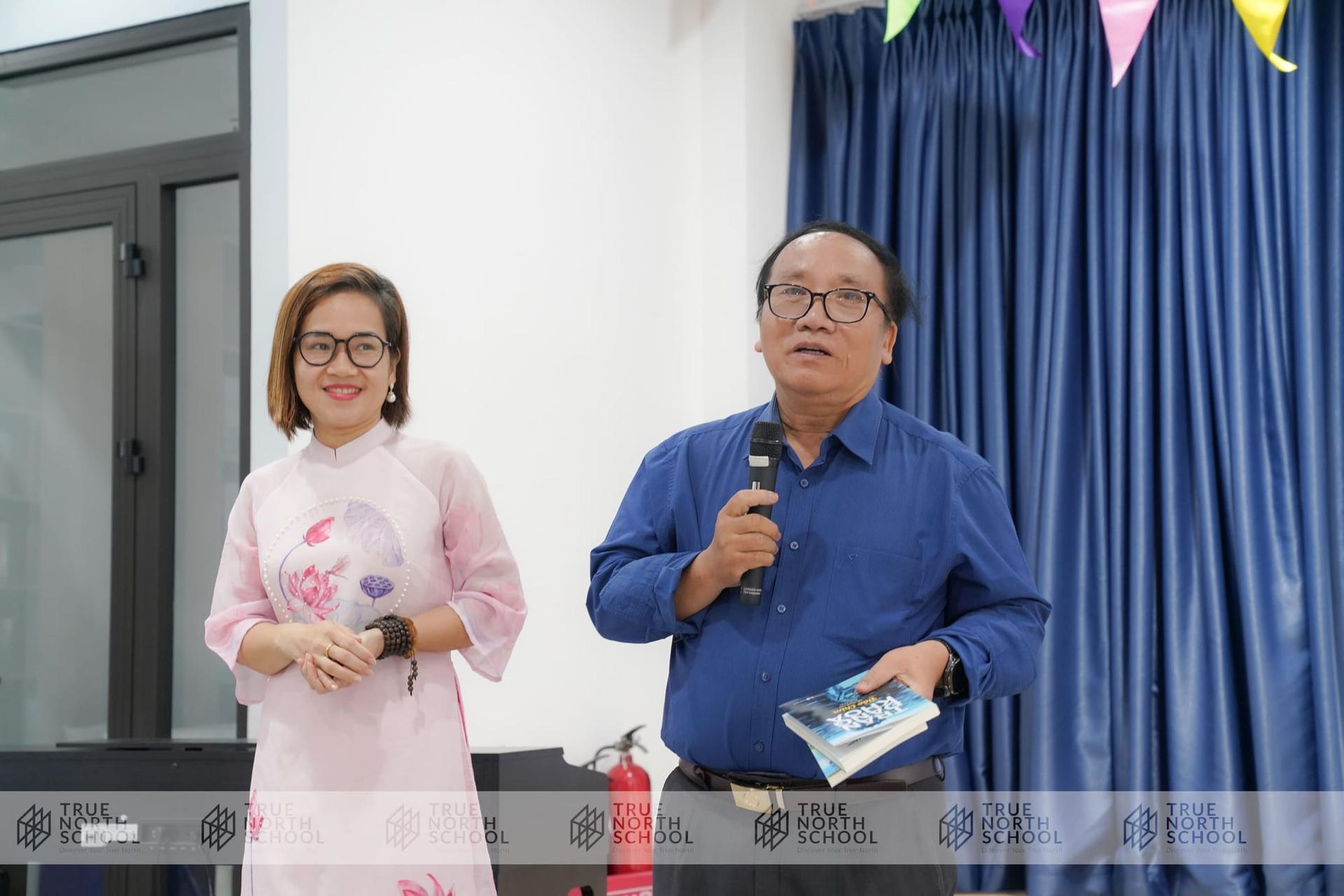
Roots matter to Vietnamese families too. Ms Ninh Thị Lâm Bằng, Bilingual Programme Director at True North with more than 18 years of experience, has observed that with the right guidance, children don’t just enjoy traditional cultural values. They learn to cherish them.
Can a Non-Vietnamese Child Join the Bilingual Track?
Usually, yes. But it suits only some families. The bilingual track adds a heavy Vietnamese-language load. For a child staying five years or more and settling in locally, that load is more likely to pay off. For a child leaving in two years, it may add stress without a matching benefit.
Your situation
Bilingual track for a non-Vietnamese child?
Staying 5+ years, child already speaks some Vietnamese
What English Level Does My Child Need for the International Track?
Academic English is a prerequisite for joining the international track, or switching into it later. Most schools test it with a placement assessment, not a certificate.
Children who arrive with little English aren’t automatically excluded. EAL (English as an Additional Language) support reduces the language barrier for newly arrived children. Ask whether EAL is included in tuition or charged separately.
Is the International Class Really International?
REAL EVIDENCE · REGULATION
Vietnam's Decree 86/2018/ND-CP requires Vietnamese students in a foreign programme to make up less than 50% of all students. The Decree also removed the earlier ban on children under 5 studying foreign programmes.
That cap applies across the whole school, though, not class by class. Ask for the nationality mix in your child’s actual grade.
At True North, the parent community includes Vietnamese, Korean, Indian and German families. Their published feedback offers two concrete details:
A Korean parent described Vietnamese and Korean students playing together as friends.
An Indian parent noted clear progress in their child’s soft skills, arts and presentation confidence.
When Is It Too Late to Switch Tracks?
The older your child, the more a switch costs: in money, in credits and in friendships. The last sensible switch points come earlier than most parents expect. Use the table below as a general guide, and check it against each school’s policy and your child’s own readiness.
Grade
Bilingual → International
International → Bilingual
Grades 1–5
Easiest window; needs placement test
Possible; Vietnamese catch-up needed
Grades 6–8
Possible with strong English
Hard: MOET content gap widens
Grades 9–10
Risky: AP sequencing and credits
Very hard: Grade 10 entrance exam route
Grades 11–12
Not recommended
Rarely realistic
When Is It Too Late to Switch Tracks?
Switching windows from Grade 1 to Grade 12
1
2
3
4
5
6
7
8
9
10
11
12
GradeGrade
Grades 1–5
Easiest window
Bilingual → InternationalEasiest window; needs a placement test
International → BilingualPossible; Vietnamese catch-up needed
Grades 6–8
Last comfortable window
Bilingual → InternationalPossible with strong English
International → BilingualHard: MOET content gap widens
Grades 9–10
Risky
Bilingual → InternationalRisky: AP sequencing and credits
International → BilingualVery hard: Grade 10 entrance exam route
Grades 11–12
Avoid
Bilingual → InternationalNot recommended
International → BilingualRarely realistic
EasiestPossible with conditionsRiskyAvoid
General guide only: check it against each school's switching policy and your child's own readiness, and get the conditions in writing.
Best and latest grades to switch between bilingual and international tracks in Hanoi.
Can We Switch Tracks Without Changing Schools?
Yes, if the school runs both tracks. For globally mobile families, that can reduce switching risk: your child keeps the same campus, friends and records. How much it helps depends on the school’s actual switching rules, and on how often students really move between tracks.
That’s flexibility, not a guarantee of better results. Get the conditions in writing:
Confirm in writing
Why it matters
English level required to switch
It decides whether the switch is realistic
Allowed timing (end of year vs mid-year)
Mid-year changes usually cost more
Fee difference and deposit rules
Tracks are priced differently
Refund/deduction schedule
Withdrawal deductions often rise through the year
MISTAKES THAT MAKE SWITCHING EXPENSIVE:
Deciding after the re-enrolment deposit: Re-enrolment and seat deposits for next year are often due months before the year ends, and many are non-refundable. Make the track decision first, then pay.
Judging readiness by conversation: A child who chats easily in English may still struggle with academic reading and writing in Science or Social Studies. Ask for a formal placement re-test in spring, not an informal opinion.
Switching mid-year in Grades 9–10: Credits and AP sequences run on a full-year basis. A mid-year switch at this stage can leave gaps that show up on the final transcript.
Not asking what happens to existing grades: Ask how marks from the old track will appear on the new track's records, and whether any courses must be repeated.
What Is the Real 12-Year Cost of Each Track?
Hidden fees push your total cost of ownership well above the listed tuition.
REAL EVIDENCE · 2026 FEES
In 2026, fully international schools in Hanoi charge roughly 250–950 million VND a year (about USD 10,000–38,000), depending on stage. Bilingual programmes cost meaningfully less. One-off application and enrolment/capital fees can add up to 120 million VND.
The table below uses True North International School’s published fee structure as an example.
Fee item
International Track
Bilingual (MOET) Track
School development fee
25 million VND/year
25 million VND/year
Learning materials
10 million VND/year
20–30 million VND/year (by level)
AP courses
Included in tuition
18 million VND per course
Meals
30 million VND/year (breakfast included)
25 million VND/year (no breakfast)
One-off: application, enrolment, seat deposit
[điền theo biểu phí hiện hành]
[điền theo biểu phí hiện hành]
Bus, uniform, insurance
[điền theo biểu phí hiện hành]
[điền theo biểu phí hiện hành]
What Does a Corporate Education Allowance Usually Not Cover?
Corporate education allowances partly offset the fee gap between tracks. Some cover tuition only. In that case, one-off deposits, meals, bus, exam fees and annual fee increases fall on the family.
PRO TIP FROM TRUE NORTH INTERNATIONAL SCHOOL: Talk to HR before you talk to admissions. Ask three questions in writing. Does the allowance cover non-refundable deposits and one-off fees, or tuition only? Must the school invoice be issued in the company's name for reimbursement? Does the allowance cap apply per school year or per calendar year? Families often pay a seat deposit in spring, then find out it falls outside the allowance or into the wrong reimbursement year. One email to HR can protect a sizeable deposit.
12-Year Cost Worksheet
Use each school’s fee sheet to fill it in.
12-Year School Cost Calculator: Bilingual vs International
Compare the real cost of two tracks or two schools, including hidden fees and your corporate allowance. Enter each school's published fees. Leave anything you don't know at 0.
Item
Option A
Option B
Name
Every year
Annual tuition
School development fee
Learning materials
Meals
School bus
Other annual feesInsurance, uniform, EAL, activities
This calculator gives an estimate based on the figures you enter and an assumed fee increase. It is not a quote. Always confirm fees, deposits and refund rules with each school in writing.
Line
Track A
Track B
Annual tuition × years remaining
+ Annual fees (development, materials, meals, bus) × years
+ One-off fees (application, enrolment, deposit)
+ Exam fees (AP / IB / SAT)
+ Assumed annual fee increase (%)
− Corporate allowance × years covered
= Family’s real 12-year cost
Illustrative example
12-Year Cost: Tuition vs Hidden Fees
TuitionAnnual fees (development, materials, meals, bus)One-off feesExam and course fees
12-year cost comparison of bilingual and international tracks in Hanoi, including hidden fees.
When Is Neither Track the Right Answer?
Sometimes the honest answer is “neither.” Three situations deserve a second look.
The Bilingual Track Is Not Automatically the Safe Middle Option
Two curricula in parallel can leave a child without real depth in either. For a non-Vietnamese child, the Vietnamese load may not pay off. And without a confirmed dual diploma, the main advantage disappears.
For 2–3 Year Postings, a Home-Country School May Protect Re-entry Better
Korean families can choose KISH, which follows the Korean national curriculum, or KGS Hanoi’s Cambridge-plus-Korean programme (Doris, comparison of Korean-curriculum schools). Japanese families have a Japanese school. If you know you’re going home soon, these schools may protect your child’s home-language academics better.
If another posting is likely, how well the curriculum travels matters as much as the track. Our guide to AP in Hanoi compares how AP and IB transfer between countries.
“Two Tracks Under One Roof” Only Works if Switching Is Real
If the international track’s English entry bar is very high, or the two tracks never mix, the flexibility exists only on paper. Test it on the tour. Ask how many students switched tracks last year.
How Should Families Settle Disagreements About the Long-Term Plan?
Use scenarios, not opinions. Spouses and grandparents often argue about different futures without ever naming them.
Try this 30-minute exercise together:
Scenario
Probability (%)
Bilingual score (1–5)
International score (1–5)
Stay in Vietnam long term
Return to home country
Move to a third country
For each track, multiply each scenario’s probability by its score, then add the results. Then ask your child what worries them most. After a stressful move, choosing the easier transition first is a perfectly good reason.
What Should You Ask on Every Campus Tour?
Print this checklist. Ask every school the same questions, and get the answers in writing.
Campus Tour Checklist: 10 Questions to Ask Every School
Tick each question once you've asked it, and note each school's answer. Then print it, save it as a PDF, or copy your answers to share with your family.
0 of 10 questions asked
Visiting True North International School? Book a campus tour and a 1:1 track-matching consultation, and bring this checklist with you: 024 7304 3768 · 0388 387 899 · info@truenorth.edu.vn
Your answers stay in this page only and are not sent anywhere. They clear when you reload the page, so print or copy them before you leave.
How Does True North International School Run the Two Tracks?
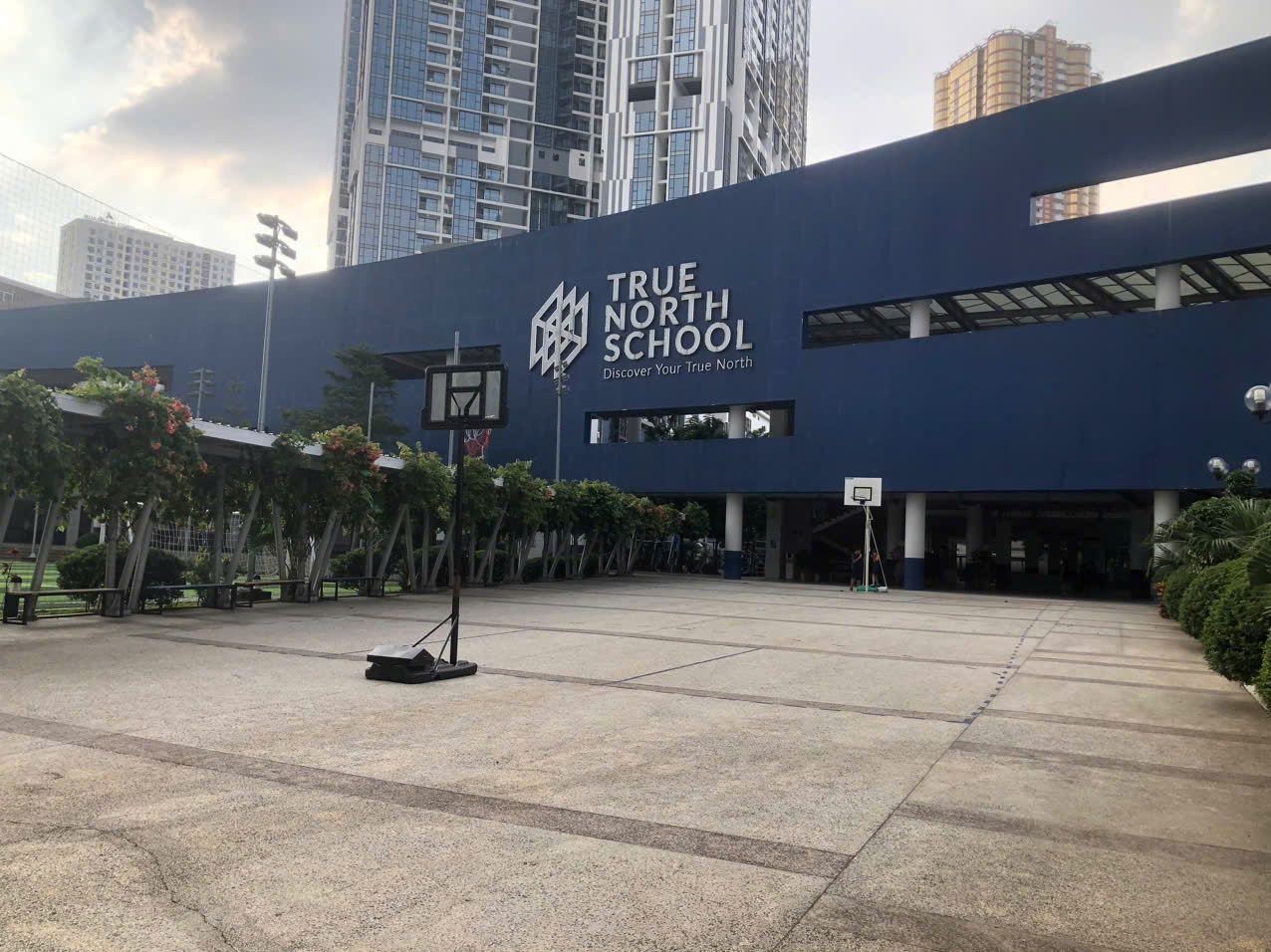
True North International School runs an International Track and a Bilingual (MOET) Track on one campus in Mo Lao, Ha Dong. It teaches students from Pre-K to Grade 12.
Element
Detail
Curriculum standards
CCSS (Mathematics, English Language Arts), NGSS (Science), STEAM, College Board AP
International Track exit
US High School Diploma
Accreditation & membership
ACS WASC, all grade levels (May 2024); Cognia System Accreditation (since 2022); EARCOS member
Leadership
Principal Gerald Schoen (23+ years leading schools in the US, Mexico, Korea, China, Thailand); International Programme Director Robert Marto (Ed.S., CIS & WASC accreditation team lead); Bilingual Programme Director Ninh Thị Lâm Bằng (18+ years)
Mentorship model
Four pillars: Character, Academic Rigour, Global Citizenship, Wellness
What Have Students Achieved So Far?
These results come from one cohort and a few individual students. They also reflect each student’s ability, effort and family support. Read them as proof of what’s possible, not a promise.
Result
Detail
First Grade 12 cohort
Offers from 30+ international universities, including Cornell, UCL, University of Melbourne, University of Sydney, Pratt and Berklee
Scholarships (first cohort)
USD 3,000,000 (US), AUD 80,000 (Australia); VinUni up to 70%; Fulbright Vietnam up to 40%
SAT (International Track)
1550/1600 (2023), 1570/1600 (2024)
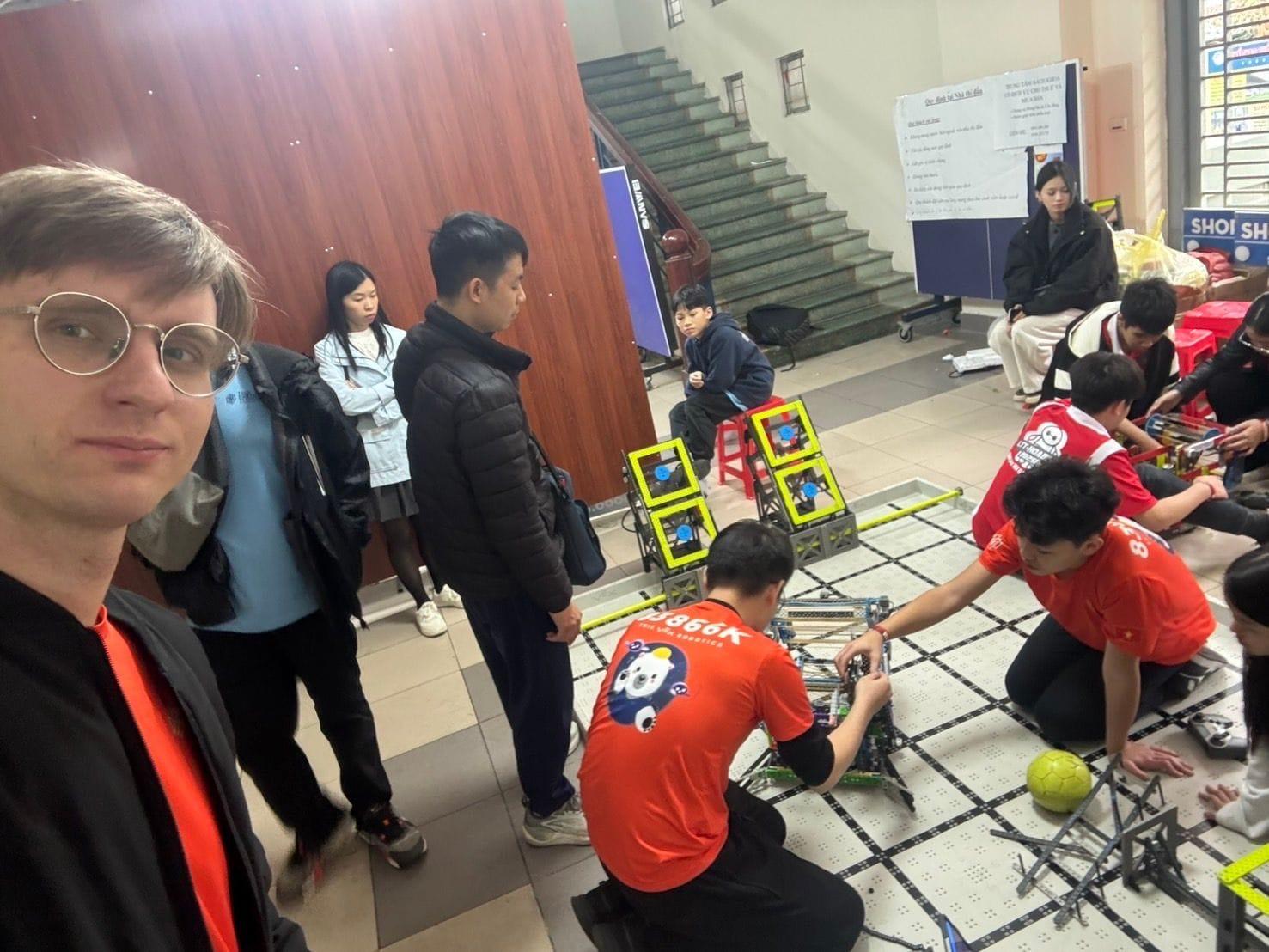
VEX Robotics
3rd place, World Championship 2023 (elementary, 251 points); National Champion 2024
Independent reviews: Schoolisting.vn rates the school 5/5 from 5 parent reviews. HaNoiReview (January 2026) ranked True North first among private primary schools in Ha Dong.
What Changed in 2025–2026, and Why Does It Matter?
Recent policy changes are shifting what each track is worth.
Fee gap widens between premium international and bilingual schools
Total cost becomes a top decision factor
If public-school English improves as planned, bilingual tracks will have to prove their value through the diploma and teaching quality, not English hours alone. How quickly that happens depends on how each province and school puts the policy into practice.
Next Step: Book Your True North Compass Check
The right track follows from where your child is heading. Bring your answers to the four bearings: Destination, Duration, Diploma and Daily English.
Book a campus tour and a one-to-one track-matching consultation at True North International School. Ask for your child’s English placement assessment, and bring the checklist above.
What should I do if my child is struggling after joining the international track in Hanoi?
Act within the first term. Ask the school for a formal English placement re-test, not an informal opinion. Then decide between three options:
Add EAL (English as an Additional Language) support while staying in the international track.
Reduce load temporarily, for example by delaying AP courses.
Move to the bilingual track, ideally at the end of the school year, before paying the next re-enrolment deposit.
Switching is easiest in Grades 1–5 and gets harder from Grade 9.
What if a Hanoi school won't confirm in writing that its bilingual track awards two diplomas?
Treat it as a warning sign. Some bilingual programmes in Vietnam award a full dual diploma. Others award only a Vietnamese diploma plus an international English certificate. Ask for the exact name of each qualification, the issuing body, and a redacted sample transcript from a past graduate. If the school can't provide these before you pay a deposit, assume the track awards a Vietnamese diploma only and compare it on that basis.
Our posting in Vietnam was extended from 2 years to 5. Should we change tracks?
Possibly. A longer stay makes a bilingual track realistic for expat children, because the Vietnamese-language load has time to pay off. Re-check your child's likely university destination first.
Still aiming at the US, Canada or home-country universities: stay in the international track.
Considering universities in Vietnam, or integrating locally: consider moving to the bilingual track.
Move before Grade 6 if possible, while the curriculum gap is still small.
Our posting was shortened. How do we protect our child's return to India, Korea, China or Japan?
Prioritise re-entry over continuity in Hanoi. Contact the target school or university at home now and confirm its current admission rules. Collect signed report cards, course descriptions and accreditation documents, and ask your embassy which documents need translation or legalisation. Step up home-language academic study, especially writing. For returns within 2–3 years, a home-country curriculum school in Hanoi, such as a Korean or Japanese school, may protect re-entry better than either track.
What should I do if my corporate education allowance doesn't cover all school fees in Hanoi?
Find the gap before enrolling. Ask HR in writing whether the allowance covers one-off fees and deposits, whether invoices must be in the company's name, and whether the cap is per school year or calendar year. Then build a 12-year cost sheet: tuition, plus annual fees (development, materials, meals, bus), plus one-off fees, plus exam fees, minus the allowance. In 2026, one-off fees at Hanoi international schools can reach about 120 million VND.
How do I compare the real cost of two schools in Hanoi?
Compare total cost of ownership, not listed tuition. For each school and track, add:
Annual tuition × years remaining
Annual fees: development, learning materials, meals, bus
Check whether AP courses are included in tuition or charged per course. In 2026, fully international schools in Hanoi charge roughly 250–950 million VND a year, and bilingual programmes cost meaningfully less.
My child speaks our home language at home but can't write it well. How do I fix this while studying in an English-medium school in Hanoi?
Spoken fluency doesn't protect academic writing. Do three things:
Benchmark your child once a year against the home-country grade-level standard.
Add structured study, such as an online home-country curriculum class or a weekend school with set reading and writing targets.
Check which language your target entrance exam or interview uses, and practise in it.
Neither the bilingual nor the international track in Hanoi teaches Hindi, Korean, Mandarin or Japanese, so families must plan this themselves.
Some bilingual programmes award only a Vietnamese diploma plus an English certificate; integrated tracks cited at about 50–70% of English-only school fees