How to Digitise Your Child's Transcript Before an International School Transfer (2026 Guide for Families in Hanoi)
Posted On: 13 October, 2026
How to digitise your child’s transcript before an international school transfer in Hanoi. This 2026 guide covers what counts as an official record in India, China, Korea, Japan and Vietnam. It shows how to export verifiable copies from DigiLocker, Gov24 and học bạ số, and how to translate and explain grading scales. It also sets out when Vietnam’s new Apostille rules actually apply, so your child’s file is right first time.
Digitising your child’s transcript means turning their school records into verifiable digital files that an English-speaking admissions team can read. Do it before your child leaves the old school. The records include the official transcript or report cards, teacher comments, the transfer certificate and any learning-support reports.
A complete file helps a Hanoi international school assess your child and place them in the right grade. It also saves you from chasing paperwork across borders or paying for translation twice. Placement still depends on the entrance assessment and your child’s age, but a well-prepared file removes the delays you can avoid.
To get started, gather four things:
What to gather
Where it comes from
Official record from your home system
DigiLocker (India), Gov24 (Korea), 在学証明書 + 指導要録 copy (Japan), notarised 成绩单 (China), học bạ số + lookup code (Vietnam)
Last two years of report cards
Current school, including teacher comments
English translation + grading-scale legend
Certified translator or school-issued bilingual copy
Transfer or leaving certificate
Current school, on the last day
Before you pay for an Apostille, ask the receiving school whether it needs one. Many K-12 applications don’t.
Below you’ll find the tools a quick summary can’t give you: a country-by-country export table, a fill-in grading legend and a file-naming template. Together they make up the True North 5-C Transfer File: Capture, Confirm, Convert, Contextualise, Collate.
Key takeaways
Pull records from official digital sources first. Scan paper second.
Download everything before your child withdraws. Portal access can end once they leave.
A grading legend matters as much as the translation.
Apostille only applies between Vietnam and Convention countries that didn’t object to its accession.
Keep the paper originals until the new school confirms in writing that it accepts digital copies.
What Counts as an “Official Transcript” for a School-Age Child?
Most children under 15 don’t have a “transcript”. The official record is whatever your home system treats as the cumulative school record, supported by recent report cards.
Admissions teams know this. Nobody expects a US-style transcript from a Grade 3 pupil. They want the document your country treats as official, plus enough context to make sense of it.
Which document is official in each country?
Country
Official record
Who issues it
Digital source
English version?
India
Board marksheet (Class X/XII); school report card and Transfer Certificate (TC) below that
CBSE/CISCE/state board; school
DigiLocker (board exams only)
Usually issued in English
China
学籍 record, 成绩单 (grade report), 在读证明 (proof of enrolment)
School / education bureau
Limited for K-12
Usually needs translation
Korea
학교생활기록부 (school life record) via NEIS
School
Gov24 (정부24)
English transcripts at middle and high school level
Japan
在学証明書 (certificate of enrolment); 指導要録 (cumulative guidance record)
School
Mostly paper; 指導要録 may go school-to-school
Some municipalities issue an English certificate
Vietnam
Học bạ / học bạ số
School, synced to the Ministry of Education’s database
Học bạ lookup portal; VNeID (rolling out)
Needs translation
What should you send if your child is in primary school?
Send three things:
The last two years of report cards.
A letter confirming enrolment.
The transfer certificate.
Make sure the report cards include teacher comments, not just grades. Those comments often tell an admissions team more about how your child learns than the numbers do.
What Counts as the Official School Record?
The document name in each country's own language, and whether you can get it in digital form
🇮🇳India
अंकपत्रBoard marksheet (Class X / XII)
स्थानांतरण प्रमाणपत्रTransfer Certificate (TC)
DigiLocker for board exams; paper from the school below Class X💻 Digital + paper
🇨🇳China
成绩单Grade report
在读证明Proof of enrolment
Usually notarised at a 公证处 (notary office)📄 Paper
🇰🇷Korea
학교생활기록부School life record (NEIS)
성적증명서 (영문)English transcript (middle / high school)
Issued online via Gov24 (정부24)💻 Digital
🇯🇵Japan
在学証明書Certificate of enrolment
指導要録Cumulative guidance record
指導要録 may be sent school-to-school📄 Paper
🇻🇳Vietnam
Học bạ sốDigital school record
Mã tra cứu học bạRecord lookup code
Verified via the MOET lookup portal; VNeID rolling out💻 Digital
💻 Digital – issued online, can be verified by the receiving school📄 Paper – needs scanning, and often notarisation
Status as of October 2026. Always confirm with the issuing school and the receiving school.
How Do You Digitise a Transcript Step by Step? The True North 5-C Transfer File
Start with the records that are easiest to verify and work down to the hardest. Finish before your child’s last day.
At True North International School, we call this the 5-C Transfer File. It packages your child’s records so an admissions panel can check them and understand them in a single sitting.
Step
What you do
Why it matters
1. Capture
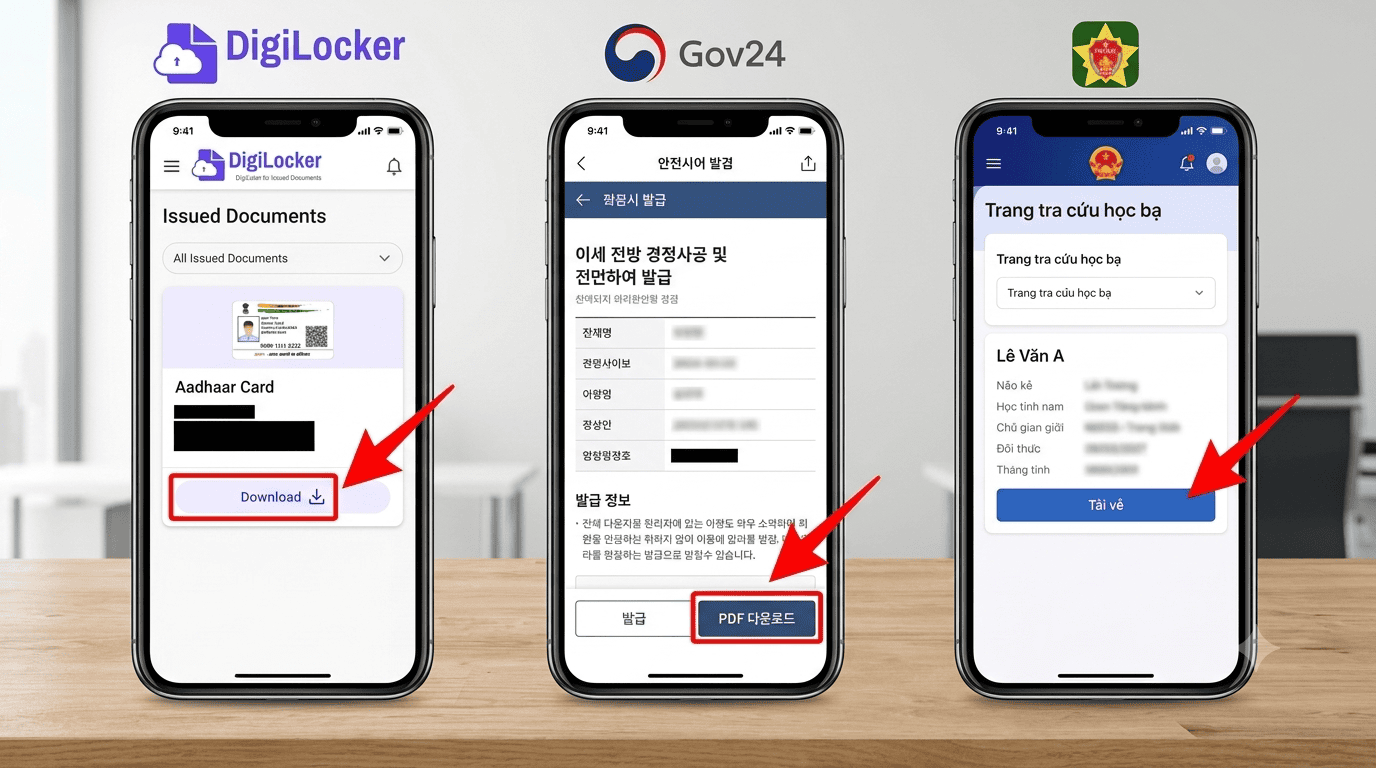
Download from DigiLocker, Gov24 or the học bạ portal first. Then scan the paper records.
The receiving school can verify government-issued digital records online.
2. Confirm
Keep QR codes, issuance numbers and lookup codes visible and intact.
A cropped QR code can stop the school from verifying the record.
3. Convert
Translate to the standard the school asks for.
A certified translation makes the record readable.
4. Contextualise
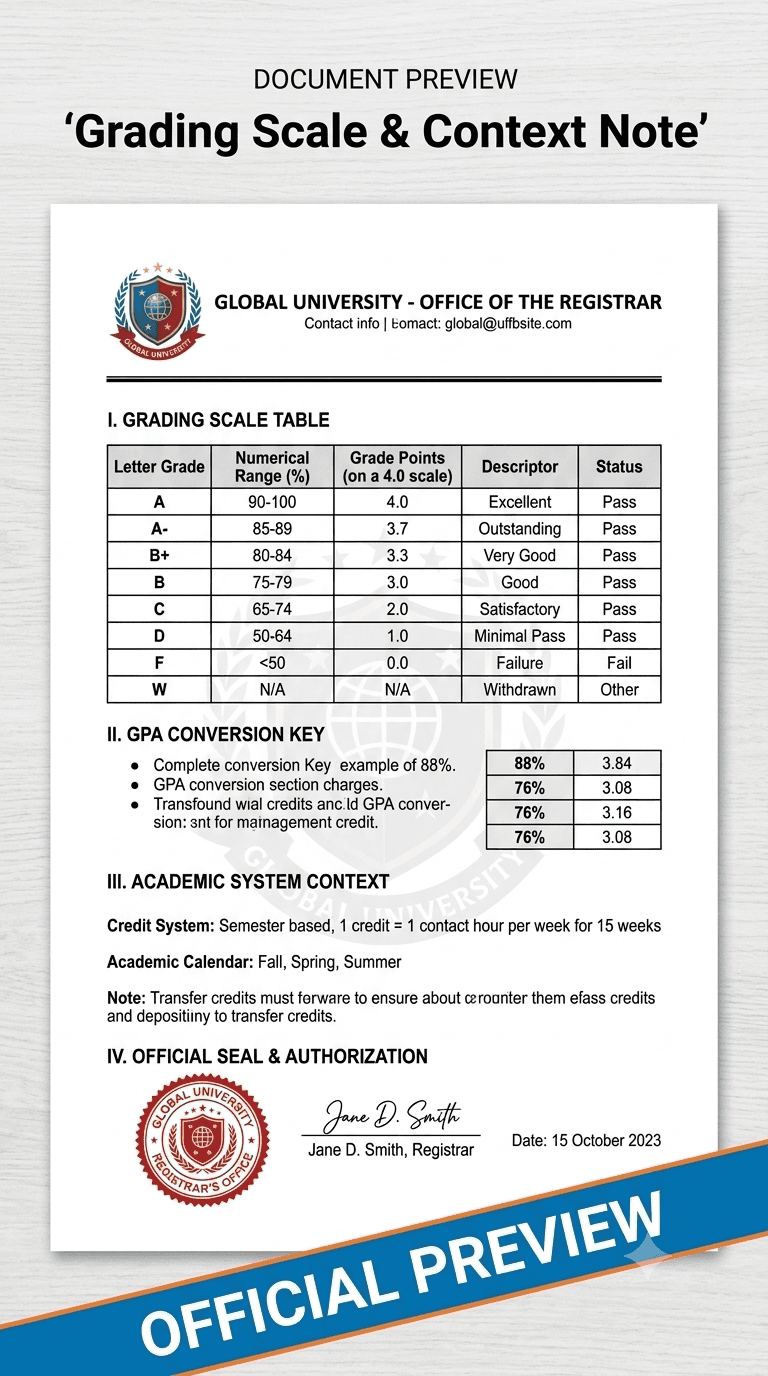
Add a one-page grading legend and context note.
The legend makes the record make sense.
5. Collate
Name the files consistently and add an index page.
Admissions can review the whole file quickly.
Whether a school accepts a verifiable digital record instead of a notarised copy is up to each school, so ask before you submit.
Your Transfer File Checklist
Choose the country that issued your child's records. Tick each item as you finish it. Your progress is saved in this browser.
✅ Your file looks complete. Book a 20-minute pre-submission review with the True North admissions team before you submit.
This checklist is general guidance as of October 2026. Always confirm exact requirements with the receiving school.
When should each step happen?
Timing
Action
6 weeks before leaving
Ask the school which records it issues in English. Request the TC and the 指導要録 copy.
3 weeks before
Download all portal records. Book a translator.
Last school day
Collect originals, the TC and any sealed envelopes.
After arriving in Hanoi
Submit through the school’s admissions portal. Bring the originals to the assessment.
Do this early. School portal accounts can be closed, or become hard to reach, once the transfer goes through. That includes Korean NEIS Plus accounts, school learning platforms and Vietnamese school logins.
The True North 5-C Transfer File
Five steps to a school record that an international school can verify and understand
1📥CaptureDownload from DigiLocker, Gov24 or the học bạ portal first, then scan paper records6–3 weeks before
2🔍ConfirmKeep QR codes, issuance numbers and lookup codes intact and visible3 weeks before
3🌐ConvertTranslate to the standard the receiving school asks for3 weeks before
4🧭ContextualiseAdd a one-page grading legend and context noteBefore last day
5🗂️CollateName files consistently, add an index and submit through the school portalLast day → arrival
6 weeks beforeAsk which records come in English; request TC and 指導要録
3 weeks beforeDownload portal records; book a translator
Last school dayCollect originals, TC and sealed envelopes
After arrivalSubmit online; bring originals to the assessment
Finish the 5-C steps before your child's last day at the old school. Portal access can end after withdrawal.
Where Do You Get Digital School Records in Each Country?
Every country stores school records differently. Use the official channel first, and fall back on paper only when there’s no digital option.
India: DigiLocker, CBSE and other boards
CBSE marksheets are stored in DigiLocker, and registered institutions can verify them online. A DigiLocker PDF that keeps its QR code and digital signature is a strong record.
📌 Evidence:CBSE digital certificates for exams held in or after 2017 are available in DigiLocker. CBSE's Parinam Manjusha repository is integrated with the Ministry of External Affairs' e-Sanad system, and registered institutions can verify student records online.
Below Class X, you won’t find anything in DigiLocker. Ask the school for:
Signed report cards.
The TC on school letterhead.
If your child is with ICSE or a state board, check the equivalent digital route with the board. [CẦN XÁC MINH: kênh số hóa của CISCE/các state board năm 2026]
China: notarisation through the 公证处
Chinese K-12 records usually need to be notarised. The notary office (公证处) certifies the copy and can often provide an English translation as well. Since 7 November 2023, China has used Apostille instead of double certification.
If you’ve already moved to Hanoi, a relative or the school in China may need to apply for you. [CẦN XÁC MINH: thủ tục công chứng từ xa / ủy quyền của 公证处 năm 2026]
Korea: English records from Gov24
For elementary pupils, request the English certificate of enrolment and have the 학교생활기록부 translated.
📌 Evidence:Korea's Gov24 (정부24) issues education certificates online through NEIS, including English-language middle and high school transcripts and English certificates of enrolment. Korea's Ministry of Foreign Affairs has run an e-Apostille site since 2016 for instant online Apostille issuance.
Download the full 생활기록부 PDF before you leave Korea. Some families find Korean logins harder to use from abroad.
Only use Korea’s e-Apostille if the receiving school or another authority asks for an Apostille.
Japan: what to request beyond the 在学証明書
Japanese schools usually give parents a 在学証明書. The 指導要録 may go straight from one school to the other instead of being handed to you. Before you leave, ask for:
An English certificate of enrolment.
A copy of the 指導要録, or confirmation that it will be sent.
Every 通知表 (report card) from the last two years.
As one example, Yokohama’s Kōhoku Ward tells families moving to a local school abroad to pick up an English certificate of enrolment on the last school day. That’s one city’s practice, so check what yours does.
If your child is leaving the Japanese School of Hanoi, ask what it sends directly to the next school.
Vietnam: học bạ số and the lookup code
Vietnam made học bạ số official from the 2025–2026 school year. Each record has a lookup code that the receiving school can use to verify it.
Ask the homeroom teacher or school office for the code before your child withdraws.
VNeID will show school records once the integration is complete, but the feature is still bedding in. Treat it as a bonus, not your main source.
Can You Translate Your Child’s Report Card Yourself?
Often, yes, for planning and for booking an assessment. For the final enrolment file, many schools want either a bilingual record issued by the school or a certified translation.
What you need depends on what the translation is for:
Purpose
Parent or machine translation
Certified translation
Notarised copy / Apostille
Booking an entrance assessment
Often accepted
Usually not needed
Usually not needed
Final K-12 enrolment file
Ask the school
Often required
Rarely required
Visa or residence paperwork
Not accepted
Required
Often required
Overseas university application
Not accepted
Required
Varies by university
A good translation is more than a word-for-word swap. It should:
Translate teacher comments in full.
Describe every stamp and seal in words.
Follow the original layout, so reviewers can check it line by line.
Include the grading legend.
PRO TIP FROM TRUE NORTH INTERNATIONAL SCHOOL: Before any translation starts, give the translator a one-line "identity key". It should contain your child's name exactly as it appears in the passport and the date of birth in DD/MM/YYYY. Records from Asia often spell the same child three different ways: Korean romanisation, Chinese pinyin, Vietnamese without diacritics, or Japanese romaji that differs from the passport. Dates cause the same problem. Japanese records may use era years (令和 / Reiwa), and Korean or Chinese records often use YYYY.MM.DD. If the name or date on the translation does not match the passport, an admissions or visa officer may ask whether the documents belong to the same child. Ask the translator to keep the original spelling in brackets once, then use the passport spelling throughout and convert every date to the Gregorian calendar.
How do you avoid paying for translation twice?
Before you book a translator, ask every school on your shortlist the same three questions:
Do you accept parent translations at the assessment stage?
Do you need a certified translator for the final file?
Do you need notarisation or an Apostille?
One email to three schools can save you a second translation bill.
How Do You Explain Your Home Grading Scale So Your Child Is Placed Correctly?
Attach a one-page grading legend. School reports feed into grade placement alongside your child’s age and the entrance assessment. Without context, raw numbers can make a strong student look average.
Korean stanine grades are a good example. They rank students against their own cohort, so the same grade means something different at a selective school and at a general one. Without a note, an admissions reader may not spot the difference.
A legend won’t decide placement on its own. English level, age cut-offs and the school’s own assessment all count. What it does is stop your child’s record being misread.
3-level (primary) or 5-level (lower secondary) evaluation
Which scale is used; whether it’s absolute or relative
If the school publishes its own legend, use that instead of this table.
Fill-in template: Grading Scale & Context Note
Field
Your answer
School name and city
School type (public / private / international / selective)
Curriculum (CBSE, Korean national, MOET, etc.)
Language of instruction
Grading scale and pass mark
Class or cohort size
Child’s strongest subjects
Learning-support needs (if any)
Teacher contact for a reference
PRO TIP FROM TRUE NORTH INTERNATIONAL SCHOOL: Add one more line to your context note: "Months completed in current grade." School years start at different times. Korea starts in March, Japan and India (CBSE) in April, China and Vietnam in September, and American-curriculum schools in August. A child leaving a Korean school in July has finished only about four months of their grade, even though the report card names a full grade level. Without that line, a reader may assume a full year was completed and place the child too high, or ask for records that do not exist yet. Pair the months figure with the child's date of birth so the school can check its age cut-off at the same time.
Grade Placement Timing Calculator
Work out how much of the current grade your child has finished, and get your 5-C countdown dates. Paste the result straight into your Grading Scale & Context Note.
Please enter the last school day.
Months completed in current grade
Age reference only
Your 5-C countdown
Paste into your Context Note
The months figure counts calendar months since the school year began, holidays included. The age figure is for reference only: True North International School will confirm its own age cut-off and grade placement during admissions.
Teacher comments and samples of your child’s work often add useful context. They show how your child thinks, not just how they scored.
SEN or psychologist reports help schools plan learning support, often before they make an offer, so have them translated in full.
Do You Need an Apostille Now That Vietnam Has Joined the Convention?
For many K-12 applications, schools don’t ask for one. Apostilles come up more often for visas and university applications, so check with the school before you pay.
Since 11 September 2026, an Apostille has replaced consular legalisation between Vietnam and Convention countries that didn’t object to its accession.
📌 Evidence:Decree 293/2026/ND-CP took effect on 11 September 2026, allowing Vietnamese public documents to be authenticated by Apostille for use in Convention countries. Non-Convention countries remain under consular legalisation, and Austria, Czechia and Germany objected to Vietnam's accession, so Apostille does not currently operate with those three states.
An Apostille confirms that the signature and seal on a document are genuine. It doesn’t translate the document, and it doesn’t vouch for the grades.
Do I Need an Apostille?
Answer three quick questions to see which authentication route, if any, your child's school record needs. Based on Vietnam's rules from 11 September 2026.
General guidance as of October 2026, not legal advice. Objection lists can change, so check the HCCH status table and confirm with the receiving school or authority before you pay for any certification.
Notarisation, certified translation, legalisation and Apostille compared
Term
What it proves
Who does it
Notarised copy
The copy matches the original
Notary (公证处, a Vietnamese notary office, etc.)
Certified translation
The translation is accurate
Certified translator or agency
Consular legalisation
The seal is genuine, via a multi-step chain
Foreign ministry plus embassy
Apostille
The seal is genuine, in a single step
The designated authority in the issuing country
Does Apostille apply between Vietnam and India, China, Korea or Japan?
Yes, as of October 2026. None of the four objected to Vietnam joining. Austria, Czechia and Germany did, so German families still need consular legalisation. Objections can change, so check the HCCH status table before you apply.
In Vietnam, Apostilles are issued by the Consular Department in Hanoi and the Ho Chi Minh City Department of Foreign Affairs. They can only apostille Vietnamese documents.
📊 By the numbers:By 15 September 2026, four days after the Convention took effect, Vietnam's Apostille authority had received 620 applications and issued 4,517 Apostille certificates. The system applies between Vietnam and 125 member states.
Applying in the wrong country: An Apostille comes only from the country that issued the document. Vietnam's Consular Department and the HCMC Department of Foreign Affairs can apostille Vietnamese records, but they cannot apostille a Korean 생활기록부 or an Indian marksheet. Those must go through Korea's or India's designated authority, so arrange it before you leave home or through someone you authorise there.
Apostilling the translation instead of the original: Check which document the receiving body wants certified: the original record, the notarised copy or the translation. Getting the wrong one apostilled means paying and waiting twice.
Altering the original: Do not laminate, staple-punch, highlight or redact a paper original. Notaries and certifying authorities may refuse altered documents. Redact national ID numbers only on your digital copies.
Asking the translator to convert grades: A translator should translate the grades, not turn them into a GPA or "equivalent" scores. Converting grades is the admissions team's job. A translator's conversion can conflict with the school's own method and raise doubts about the whole file. Put the context in your grading legend instead.
Documents legalised before 11 September 2026 are still valid in Vietnam.
Can a private school’s report card get an Apostille?
Possibly not directly. Apostilles cover public documents, so a report card from a private or international school may need to be notarised first.
Does My Child's School Record Need an Apostille?
A quick decision tree for families in Vietnam, based on the rules in force from 11 September 2026
Question 1Is the record for a K-12 school application in Hanoi?
YESGo to Question 2
NOIt's for a visa, residence permit or overseas university. Authentication is usually required, so skip to Question 3.
Question 2Does the receiving school ask for notarisation or authentication?
NO
✅No Apostille needed
Send a clear scan, verifiable digital records (DigiLocker, Gov24, học bạ số) and an English translation. Keep the originals.
YESGo to Question 3
Question 3Does the issuing country apply the Apostille Convention with Vietnam?
YESe.g. India, China, Korea, Japan
🔵Get an Apostille in the issuing country
Only the issuing country's designated authority can apostille its own documents. Vietnam's Consular Department apostilles Vietnamese documents only.
NOe.g. Germany, Austria, Czechia, or non-member countries
🟠Use consular legalisation
The document goes through the issuing country's foreign ministry, then a Vietnamese embassy or consulate.
Check first: A report card from a private or international school may not count as a public document. It may need a notarised copy before an Apostille can be issued. Ask the issuing authority before you apply.
Status as of October 2026. Countries that object to an accession can change, so check the HCCH status table before applying.
Is Digitising Always Enough? The Counter-Argument
No. A digital record isn’t automatically an accepted one, and our “chain of trust” approach has limits.
Some institutions still want sealed paper. The University of Houston Graduate School, for example, won’t accept electronic records sent from schools outside the US. That’s one university’s policy, not a general rule. Even so, if your child might apply abroad later, ask the old school for sealed envelopes now.
For K-12 entry in Hanoi, you may need less than you think. A clear scan and a decent translation are often enough to book the entrance assessment. Paying for an Apostille “just in case” can be money wasted.
💬 Industry view:One 2026 admissions guide for Hanoi reports that international schools typically ask for the last two years of school reports translated into English, plus any learning-support or educational-psychologist reports, with teacher references usually sent school-to-school. Requirements still vary, so confirm with each school.
Government systems are patchy. VNeID school records and Japanese municipal practice aren’t consistent yet. Keep the paper originals and certified copies until the receiving school confirms in writing that it accepts the digital version.
Digital-first works for most families. If your child is aiming at universities overseas, keep a paper trail too.
How Should You Scan and Send Records Securely?
Scan in colour at 300 dpi or higher and save as PDF, front and back of every page. Send the files only through the school’s admissions portal or its official email address.
300 dpi isn’t a formal rule, but it’s standard practice because it keeps stamps and QR codes legible.
Scanning and naming checklist
Item
Standard
Resolution
300 dpi minimum
Colour
Full colour (red seals matter)
Format
PDF, one document per file
Pages
Every page, front and back, including blank backs with stamps
PRO TIP FROM TRUE NORTH INTERNATIONAL SCHOOL: Never merge, compress or "print to PDF" an officially issued digital record, such as a DigiLocker marksheet or a Gov24 certificate. Free online merge and compress tools often strip the embedded digital signature, so the document stops validating even though it looks identical. Keep each issued PDF exactly as downloaded, untouched, in its own file. Put your scans and translations in separate files beside it. To check that a signature has survived, open the file in a PDF reader that shows signature status. If the reader no longer shows the signature panel, download the record again from the source.
Which sending channels are safe?
Channel
Safety
Notes
School admissions portal
High
Best option
Official school email
Good
Check the address on the school’s website
Encrypted share link
Good
Set an expiry date
Chat apps to agents
Low
Avoid for ID documents
National ID numbers are personal data. Only share them if the school asks, and black them out where they aren’t needed.
What If Your Situation Is Unusual?
Most unusual situations have a workaround. Sort yours out before the last school day.
Situation
What to do
Mid-year transfer, no end-of-term report
Ask for an interim progress letter and attendance record
SEN or psychologist report in another language
Have it translated in full and send it early, so support can be planned
Records from two or more countries
One 5-C file per country, plus a single combined index
HR managing several assignees
Give every family the same standard checklist
Planning for IB, AP or university
Ask for sealed transcripts now; they can be harder to get later
If your family moves every few years, curriculum continuity matters as much as paperwork. Our guide to AP in Hanoi looks at which pathway travels best when you move again.
Teacher references sent directly between schools add to the records you submit yourself. Ask the old school to send one.
How Does True North International School Review a Transfer File?
True North International School reads a transfer file for the story of how a child learns, not just the grades. Its American curriculum depends on getting placement right from day one: CCSS for English and Maths, NGSS for Science, and College Board AP.
The school’s families come from Vietnam, Korea, India and Germany, among other countries, so the admissions team regularly works with records in several languages.
True North’s first Grade 12 class received offers from more than 30 international universities, including Cornell, UCL and the University of Melbourne, plus US$3 million in scholarships from US universities.
A complete, consistent academic history is one of the things universities look at. Those results came from many things, though: students’ coursework, test scores, activities and university counselling. A tidy transfer file helps, but it’s only one part of that story.
Since May 2024, True North has been fully accredited by ACS WASC across all grade levels. It is also a member of EARCOS.
Next step: Download the country-by-country Transcript Digitisation Checklist, then book a 20-minute document review with the True North admissions team before you submit.
📍 TH-03, Mỗ Lao Urban Area, Hà Đông, Hanoi · ☎ (024) 7304 3768 · ✉ info@truenorth.edu.vn
Written by Kiều Trọng Tú. Reviewed by Nguyễn Bá Thuyên.
Data Sources
#
Source
What it supports
Evidence level
Link
1
Baker McKenzie (September 2026)
Decree 293/2026/ND-CP; objections by Austria, Czechia and Germany
Troubleshooting Q&A: Digitising School Records for an International School Transfer
What can I do if I lost access to my child's old school portal after withdrawal?
Contact the old school's office in writing. Ask them to issue the records directly as PDFs or printed copies with the school seal.
Government channels also stay open to parents after a child leaves:
Korea: Gov24 issues the 학교생활기록부 and English certificates online.
India: CBSE board results remain in DigiLocker.
Vietnam: The school can re-issue the học bạ số lookup code.
To avoid this, download every record before your child's last school day.
What if my child's name is spelled differently on different school documents?
Use the passport spelling as the master version. Ask your translator to show the original spelling in brackets once, then use the passport spelling throughout.
Add a short "identity key" page listing the passport name, every alternative spelling and the date of birth.
Mismatches are common with Korean romanisation, Chinese pinyin, Vietnamese diacritics and Japanese romaji. An unexplained mismatch can make admissions or visa officers question whether the documents belong to the same child.
Why does my DigiLocker or Gov24 PDF no longer show as verified?
The file was probably altered after download. Merging, compressing or "printing to PDF" often strips the embedded digital signature, even when the page looks identical.
Download the record again from the official source and keep it as a separate, untouched file. Open it in a PDF reader that shows signature status to confirm the signature is still there. Put translations and scans in separate files.
My old school says it only sends records school-to-school. What should I do?
Ask the old school for the receiving school's admissions email and send it in writing. Then confirm the delivery date with both schools. This is standard for confidential records such as Japan's 指導要録 and teacher references.
Meanwhile, give the new school what you hold yourself:
Report cards
Certificate of enrolment
Transfer certificate
Most international schools can start assessment with these. They then complete the file when the school-to-school records arrive.
Can I get an Apostille in Hanoi for documents issued in Korea, India, China or Japan?
No. An Apostille can only be issued by the designated authority of the country that issued the document. Vietnam's Consular Department and the HCMC Department of Foreign Affairs apostille Vietnamese documents only.
For foreign records, you have three options:
Apply before leaving the home country.
Authorise a relative or agent there.
Use an online service where one exists, such as Korea's e-Apostille.
First, confirm whether the receiving school needs an Apostille at all.
What documents should I submit if my child transfers mid-year with no end-of-term report?
Ask the old school for an interim progress letter. It should state:
Subjects studied
Current attainment
Attendance
The number of months completed in the current grade
Submit it with the most recent full report card and a transfer or leaving certificate. School years start at different times (March in Korea, April in Japan and India, September in China and Vietnam), so the months-completed figure helps the new school place your child in the right year group.
Do German, Austrian or Czech families still need consular legalisation in Vietnam?
Yes. Austria, Czechia and Germany objected to Vietnam's accession to the Apostille Convention, so Apostille does not currently operate between Vietnam and those three countries. Documents issued there still go through consular legalisation when a Vietnamese authority requires it.
For a K-12 school application, ask the school first. Many international schools assess children from clear copies and certified translations without legalisation.